
Introduction
In today’s competitive digital world, branding is no longer optional-it is essential. Every successful business, personal brand, or startup you recognize has one thing in common: a strong visual identity. From logos and colors to typography and layouts, visual identity shapes how people perceive and remember a brand.
In 2025, audiences are overwhelmed with content. They scroll fast, decide quickly, and trust brands that look professional and consistent. A strong visual identity helps you stand out, build credibility, and create an emotional connection with your audience.
This complete guide will help you understand:
- What branding and visual identity really mean
- Why visual identity is important
- Core elements of a strong visual identity
- Step-by-step process to build one
- Common branding mistakes to avoid
- Trends shaping visual identity in 2025
This article is perfect for graphic designers, freelancers, business owners, startups, and students.
What Is Branding?
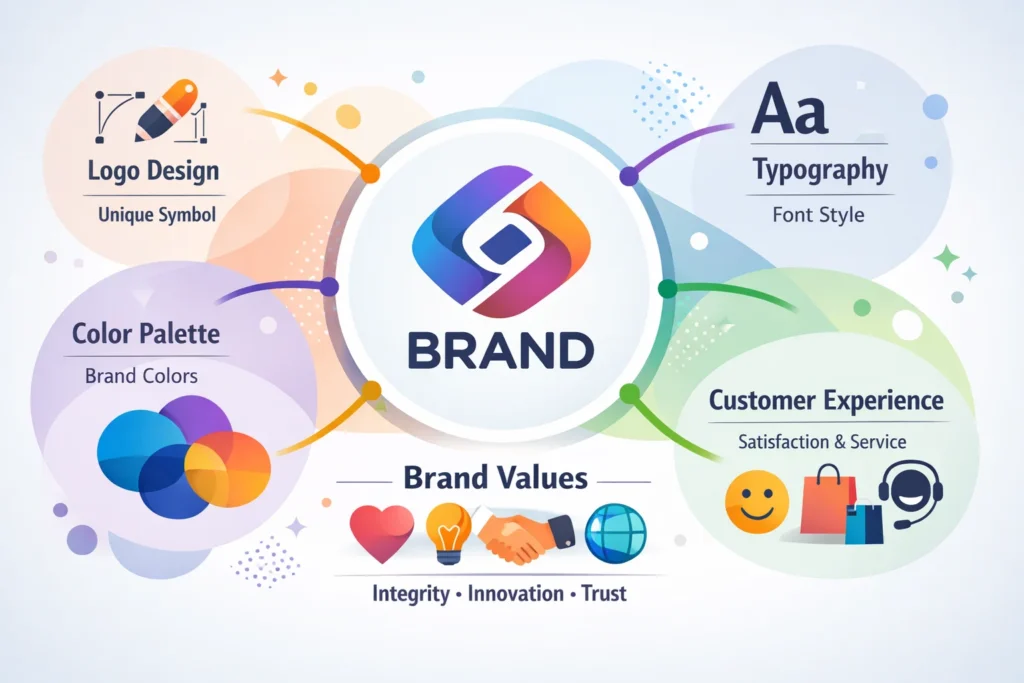
Branding is the process of shaping how people perceive, feel, and think about your business or personal brand. It goes beyond logos and visuals-it includes values, voice, experience, and consistency.
In simple terms:
Branding = how people remember you.
Branding includes:
- Visual identity
- Brand voice
- Messaging
- Customer experience
- Emotional connection
What Is Visual Identity?
Visual identity is the visual expression of a brand. It is how your brand looks across all platforms and touchpoints.
Visual identity includes:
- Logo
- Color palette
- Typography
- Icons & graphics
- Layout style
- Imagery style
A strong visual identity ensures your brand looks consistent, recognizable, and professional everywhere.
Branding vs Visual Identity (Important Difference)
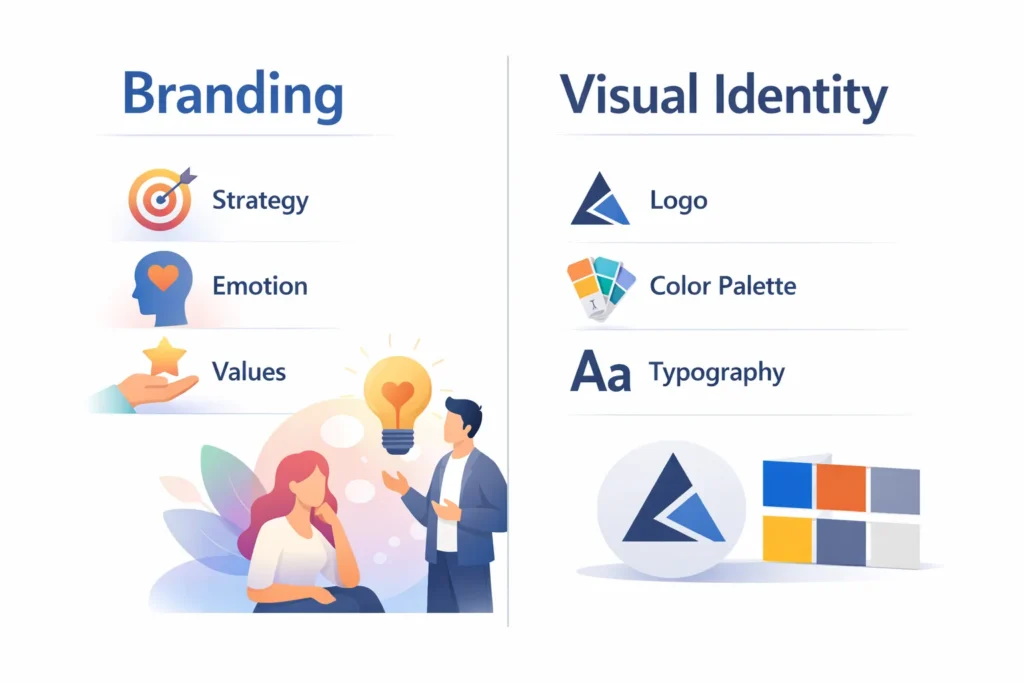
Many beginners confuse branding with visual identity.
- Branding → strategy, perception, emotion
- Visual identity → visual tools that represent the brand
Visual identity supports branding-it brings the brand to life visually.
Why a Strong Visual Identity Is Important
A strong visual identity is a business asset.
Key Benefits
- Builds trust and credibility
- Improves brand recognition
- Creates emotional connection
- Makes marketing more effective
- Differentiates from competitors
In 2025, brands with inconsistent visuals often appear unprofessional and unreliable.
Core Elements of a Strong Visual Identity
1. Logo
The logo is the face of your brand. It should be:
- Simple
- Memorable
- Versatile
- Relevant
A logo works best when supported by a complete visual system.

2. Color Palette
Colors communicate emotions instantly.
A brand color palette usually includes:
- Primary color
- Secondary colors
- Accent color
Colors must remain consistent across all platforms.
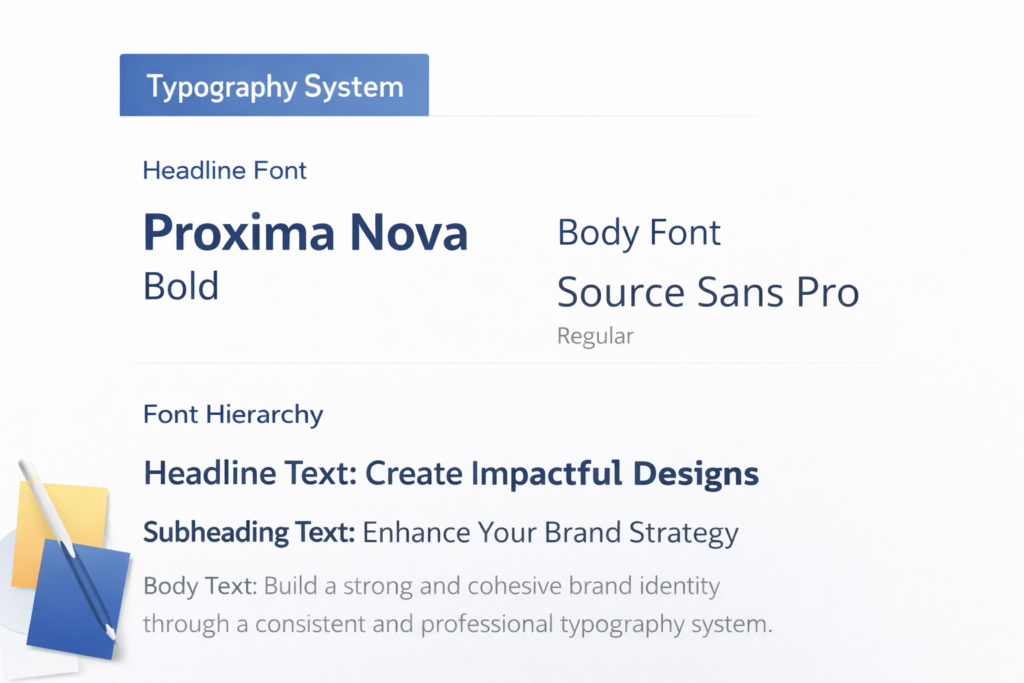
3. Typography
Typography defines how your brand speaks visually.
Typography Includes
- Primary font
- Secondary font
- Heading & body styles
Fonts should match the brand personality-modern, professional, playful, or premium.
4. Imagery & Graphics Style
This includes:
- Photography style
- Illustrations
- Icons
- Patterns
Your visuals should follow a consistent style to strengthen recognition.
5. Layout & Composition
Layout refers to how elements are arranged.
Consistent layout helps:
- Improve readability
- Create professional appearance
- Strengthen brand identity

Step-by-Step: How to Create a Strong Visual Identity
Step 1: Understand Your Brand
Before designing anything, define your brand clearly.
Ask These Questions
- What is the brand’s mission?
- Who is the target audience?
- What values does the brand represent?
- What emotions should people feel?
This clarity guides every design decision.

Step 2: Research Your Industry & Competitors
Research helps you:
- Avoid copying
- Understand industry expectations
- Identify gaps
- Find opportunities to stand out
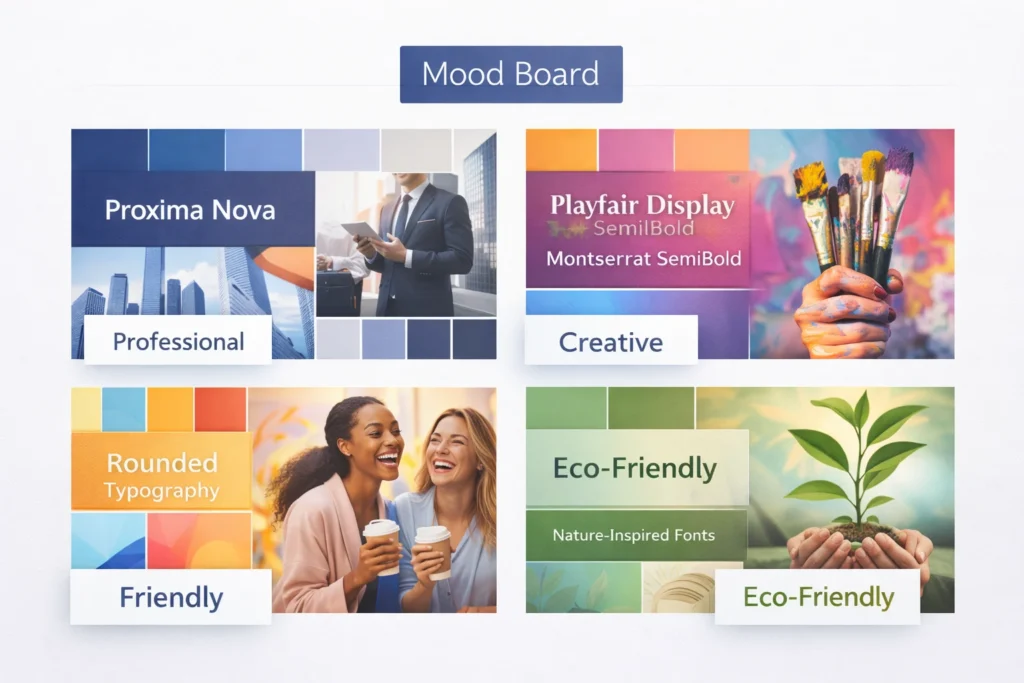
Step 3: Define Brand Personality
Choose 3-5 personality traits such as:
- Modern
- Friendly
- Premium
- Bold
- Minimal
These traits influence colors, fonts, and visuals.
Step 4: Create Your Logo
Design a logo that aligns with your strategy and personality.
Best Practices
- Start in black and white
- Keep it simple
- Test scalability
- Avoid trends that age quickly
The logo should feel timeless.
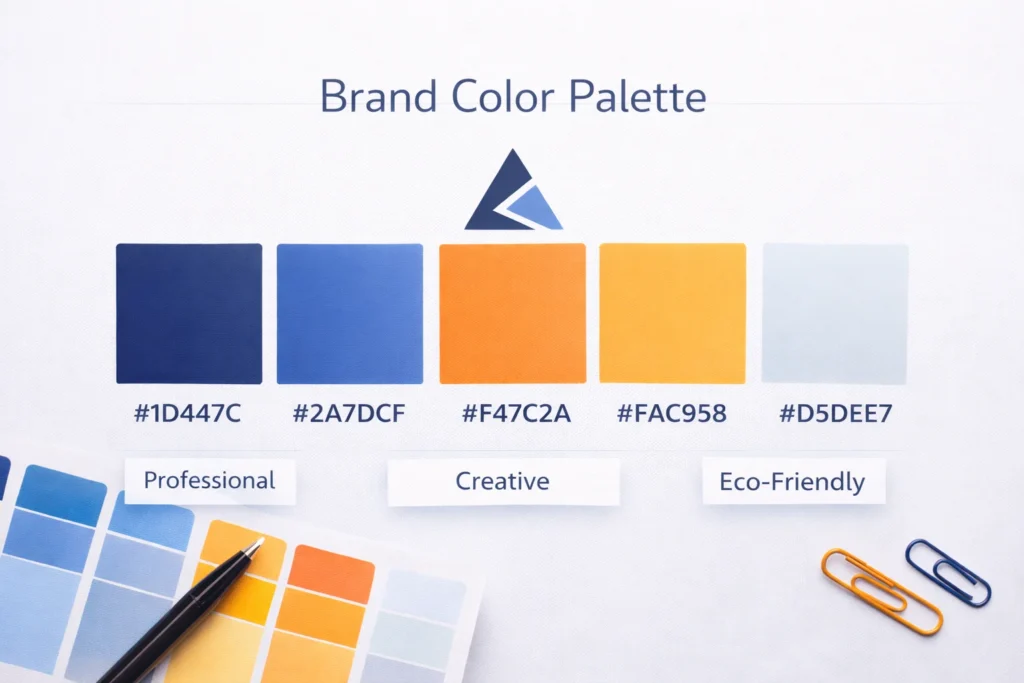
Step 5: Build a Color Palette
Choose colors based on:
- Brand emotion
- Target audience
- Industry standards
Test colors for contrast and accessibility.
Step 6: Select Typography
Typography should be:
- Readable
- Consistent
- Flexible across platforms
Limit your brand to 2-3 fonts.
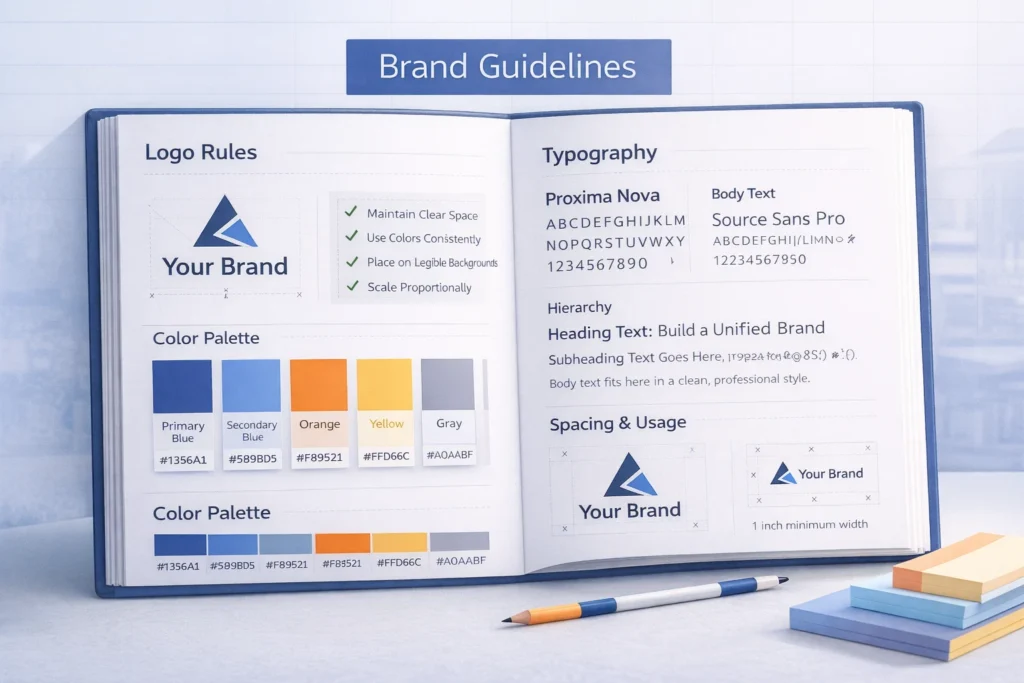
Step 7: Define Visual Style Guidelines
This includes:
- Logo usage rules
- Color usage
- Typography rules
- Image style
These guidelines maintain consistency.
Step 8: Apply Visual Identity Everywhere
Apply your visual identity consistently across:
- Website
- Social media
- Marketing materials
- Packaging
- Presentations
Consistency builds recognition and trust.
Common Visual Identity Mistakes to Avoid
Many brands fail due to these mistakes:
- Inconsistent colors
- Using too many fonts
- Overcomplicated logo
- Ignoring brand strategy
- Chasing trends blindly
Avoiding these mistakes keeps your brand strong.
Visual Identity Trends in 2025
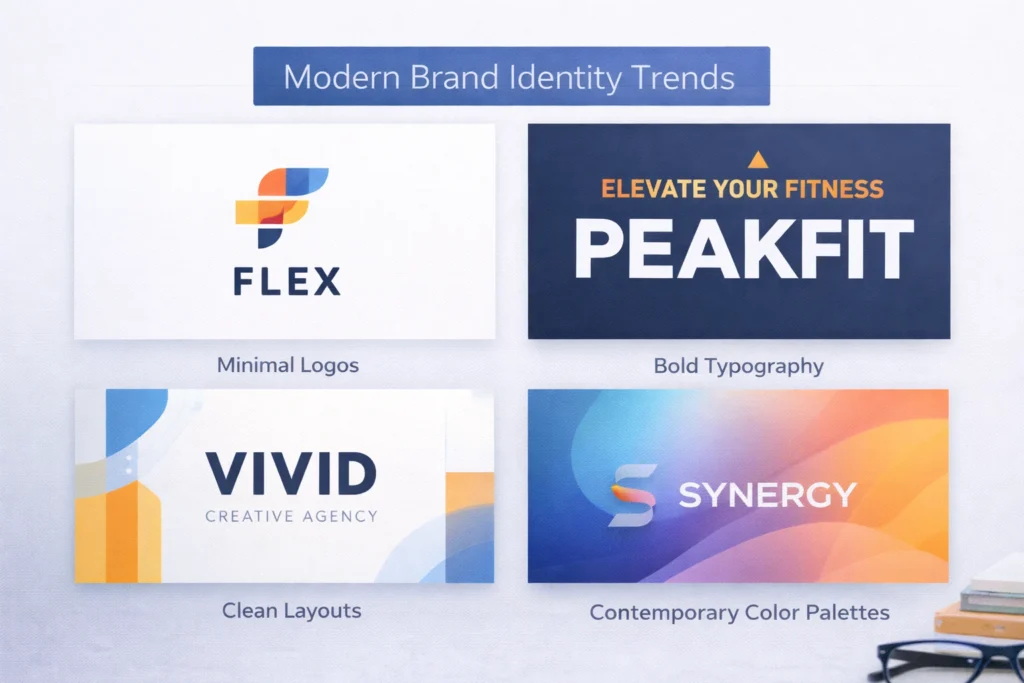
Popular trends influencing branding include:
- Minimal and clean systems
- Flexible logo systems
- Bold typography
- Personal branding aesthetics
- Dark mode-friendly palettes
Use trends thoughtfully, not excessively.
How Long Does It Take to Build a Visual Identity?
A complete visual identity can take:
- 2–4 weeks for small brands
- 1–2 months for full branding systems
Quality branding takes time and strategy.
Why Visual Identity Is an Investment
A strong visual identity:
- Saves marketing time
- Improves brand trust
- Attracts better clients
- Supports long-term growth
Good branding pays off over time.
Who Needs a Strong Visual Identity?
- Startups
- Small businesses
- Personal brands
- Freelancers
- Influencers
- Established companies
If you want to be taken seriously, visual identity matters.
Conclusion
Creating a strong visual identity is not about decoration-it is about clarity, consistency, and connection. In 2025, brands that succeed are those that communicate clearly and look professional across every platform.
By understanding your brand, defining a clear strategy, and applying visual elements consistently, you can build a visual identity that is memorable, trustworthy, and timeless.
A strong visual identity doesn’t just make your brand look good-it makes it work better.
