
Introduction
Color is one of the most powerful tools in graphic design and branding. Before someone reads your brand name or understands your message, they feel your brand through color. In just a few seconds, colors can create trust, excitement, calmness, or even rejection.
In 2025, branding is more competitive than ever. Businesses are fighting for attention on websites, social media, ads, and apps. Choosing the right brand colors is no longer a design preference-it’s a strategic business decision.
This complete guide will help you understand:
- Why color matters in branding
- How color psychology works
- What different colors represent
- How to choose the perfect color palette
- Common mistakes to avoid
- Tools to help you choose brand colors
Whether you are building a personal brand, startup, or redesigning an existing business, this guide will give you clarity and confidence.
Why Brand Colors Are So Important
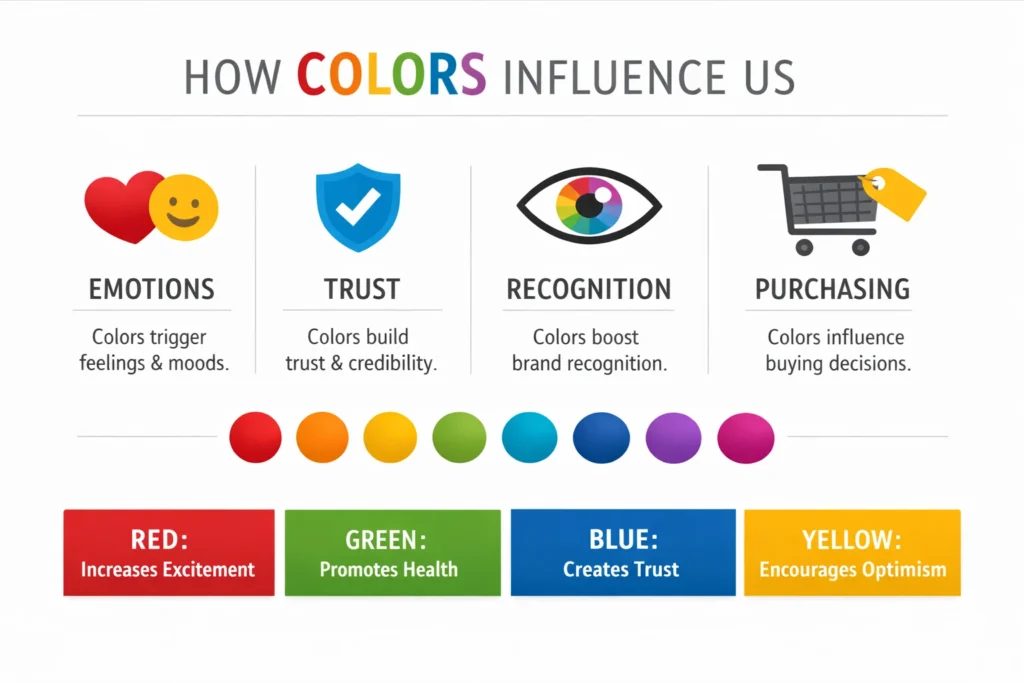
Colors influence how people perceive your brand, often subconsciously.
Key Reasons Color Matters
- Creates first impressions
- Builds brand recognition
- Communicates brand personality
- Influences buying decisions
- Creates emotional connection
Studies show that people recognize brands faster by color than by name or logo shape. That’s how powerful color is.
What Is Color Psychology?
Color psychology studies how colors affect human emotions and behavior. While cultural differences exist, many color associations are universal.
In branding, color psychology helps designers choose colors that align with:
- Brand values
- Target audience
- Industry expectations
Good branding uses color intentionally, not randomly.
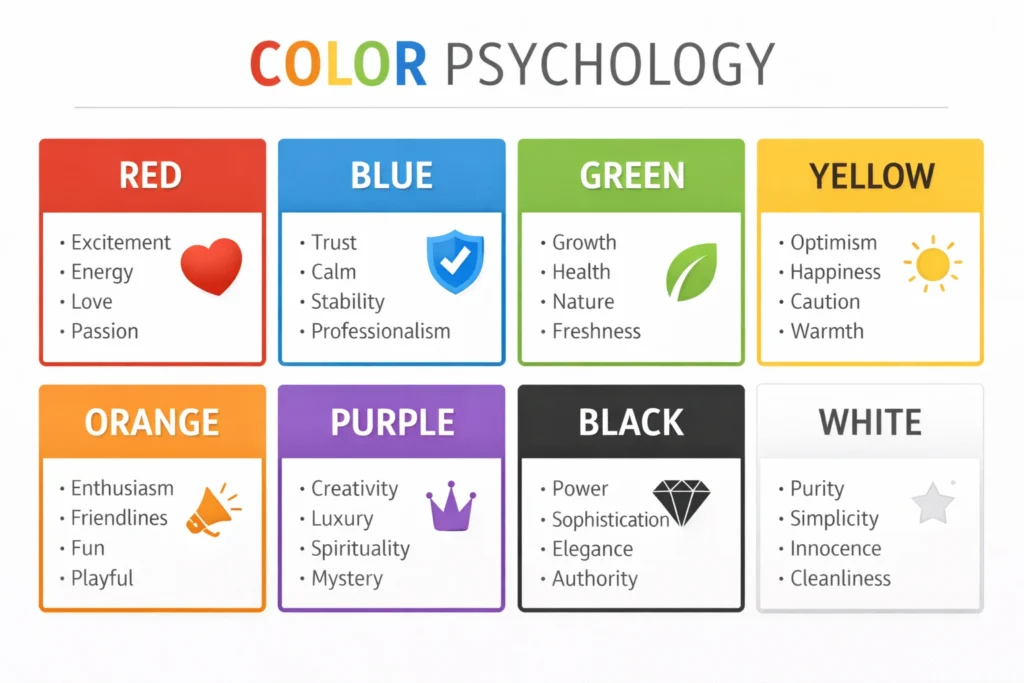
Meaning of Common Brand Colors
Let’s understand what popular colors communicate in branding.
Red – Energy, Passion, Urgency
Red is bold and attention-grabbing.
Commonly used by:
- Food brands
- Entertainment
- Sales & promotions
Best for: Brands that want excitement and action.
Blue – Trust, Stability, Professionalism
Blue is one of the most trusted colors.
Commonly used by:
- Tech companies
- Healthcare
- Finance
Best for: Brands that want reliability and credibility.
Yellow – Optimism, Happiness, Warmth
Yellow feels friendly and energetic.
Commonly used by:
- Creative brands
- Youth-focused businesses
Best for: Brands that want positivity and friendliness.
Green – Growth, Nature, Health
Green represents balance and sustainability.
Commonly used by:
- Eco brands
- Health & wellness
- Finance
Best for: Natural, ethical, and growth-focused brands.
Orange – Creativity, Confidence, Fun
Orange combines energy and friendliness.
Commonly used by:
- Startups
- Creative agencies
Best for: Brands that want to feel modern and bold.
Purple – Luxury, Wisdom, Creativity
Purple often feels premium and artistic.
Commonly used by:
- Beauty brands
- Luxury products
Best for: High-end or imaginative brands.
Black – Elegance, Power, Sophistication
Black is timeless and premium.
Commonly used by:
- Fashion
- Luxury brands
Best for: Minimal, premium branding.
White – Simplicity, Cleanliness
White represents clarity and minimalism.
Commonly used by:
- Tech brands
- Healthcare
Best for: Clean and modern identities.
Understanding Your Brand Before Choosing Colors
Before selecting colors, you must understand your brand deeply.
Ask Yourself These Questions:
- What is my brand personality?
- Who is my target audience?
- What emotions should people feel?
- Is my brand modern or traditional?
- Is it playful or professional?
Your answers will guide your color choices.
Know Your Target Audience
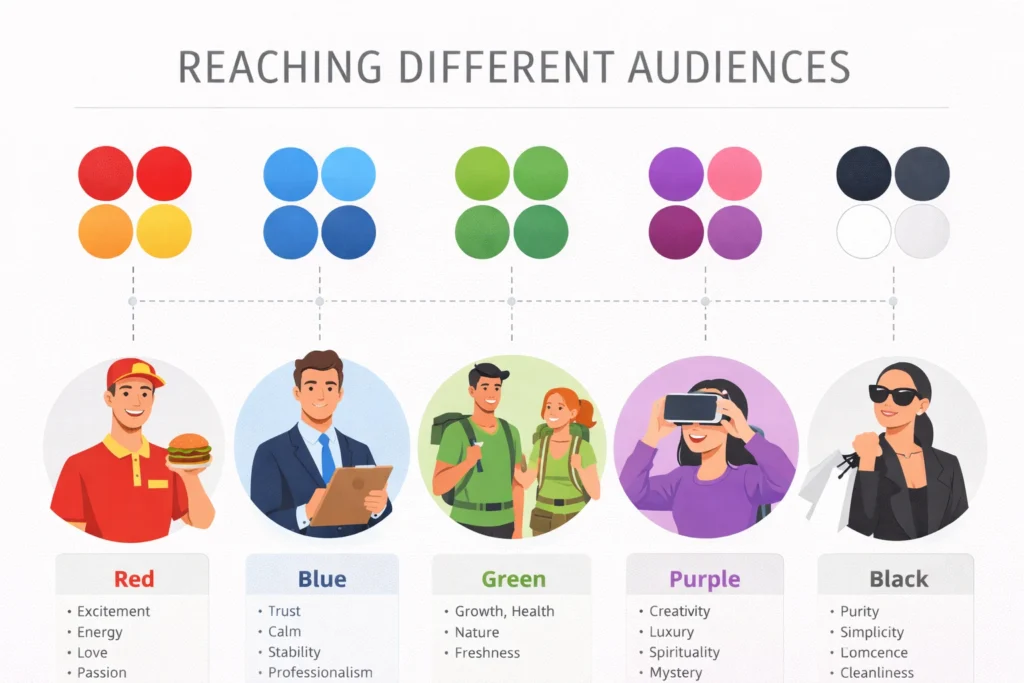
Different audiences respond to colors differently.
Examples :
- Young audiences → bright, energetic colors
- Corporate clients → neutral, professional colors
- Luxury buyers → dark, elegant colors
Always design for your audience, not personal preference.
Understanding Color Schemes
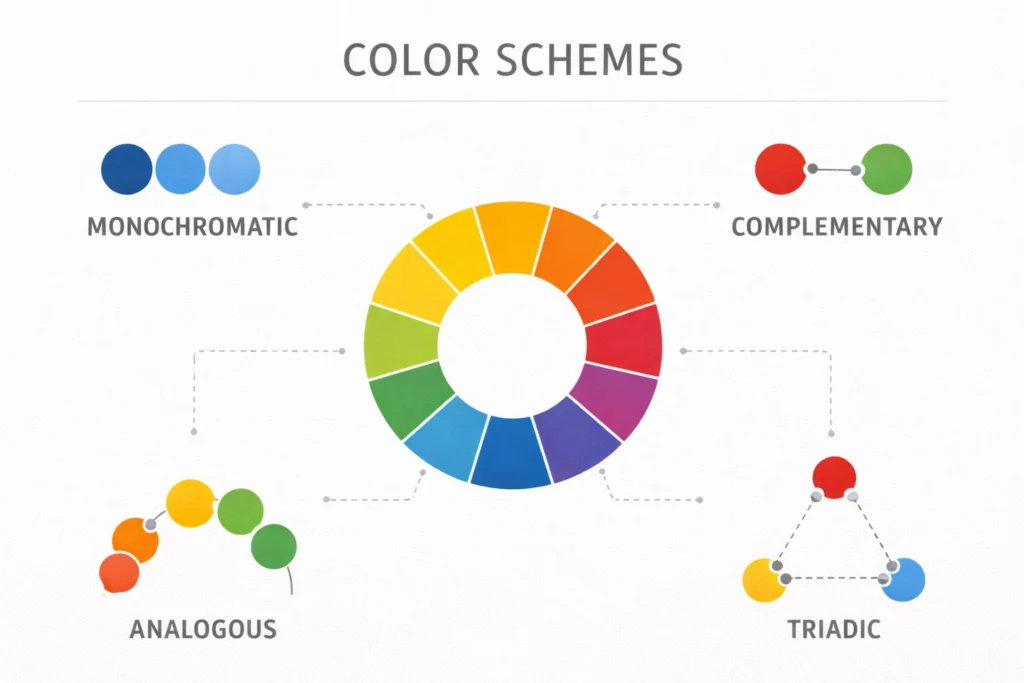
A color scheme is a combination of colors used together.
Popular Color Schemes
- Monochromatic – one color, different shades
- Analogous – colors next to each other
- Complementary – opposite colors
- Triadic – three evenly spaced colors
Each scheme creates a different mood.
How Many Colors Should a Brand Use?
In 2025, simplicity is key.
Ideal Brand Palette
- Primary color – main brand color
- Secondary colors – support visuals
- Accent color – call-to-action highlights
Usually 3–5 colors are enough.
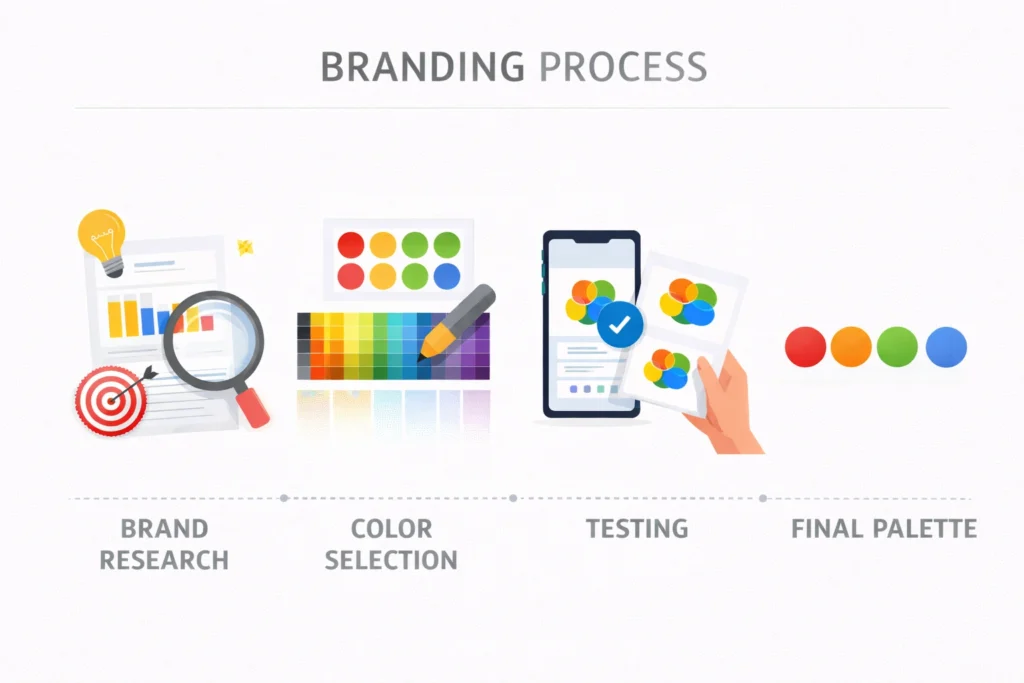
Step-by-Step: How to Choose the Right Brand Colors
Step 1: Define Brand Personality
Choose keywords like:
- Modern
- Friendly
- Premium
- Bold
- Calm
Step 2: Research Competitors
Study competitors’ colors and aim to stand out.
Step 3: Choose Your Primary Color
Select one color that represents your brand’s core emotion.
Step 4: Add Supporting Colors
Pick colors that complement your primary color.
Step 5: Test Across Platforms
Check how colors look on:
- Website
- Mobile
- Social media
Common Brand Color Mistakes to Avoid
Many brands fail due to poor color decisions.
Avoid These Mistakes
- Choosing colors based on trends only
- Using too many colors
- Ignoring contrast and readability
- Copying competitor colors
- Not testing accessibility
Good color choices balance creativity and usability.
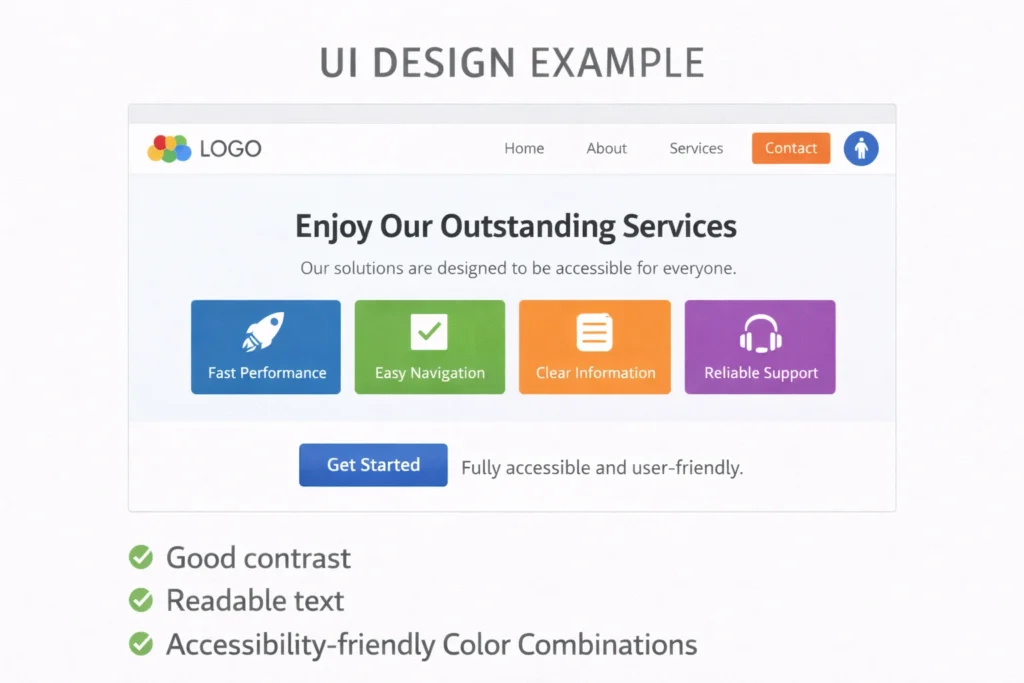
Accessibility & Readability in Color Choice
In 2025, inclusive design matters.
Best Practices
- High contrast between text and background
- Avoid light text on light backgrounds
- Test for color blindness
Accessible colors improve user experience for everyone.
Tools to Help You Choose Brand Colors
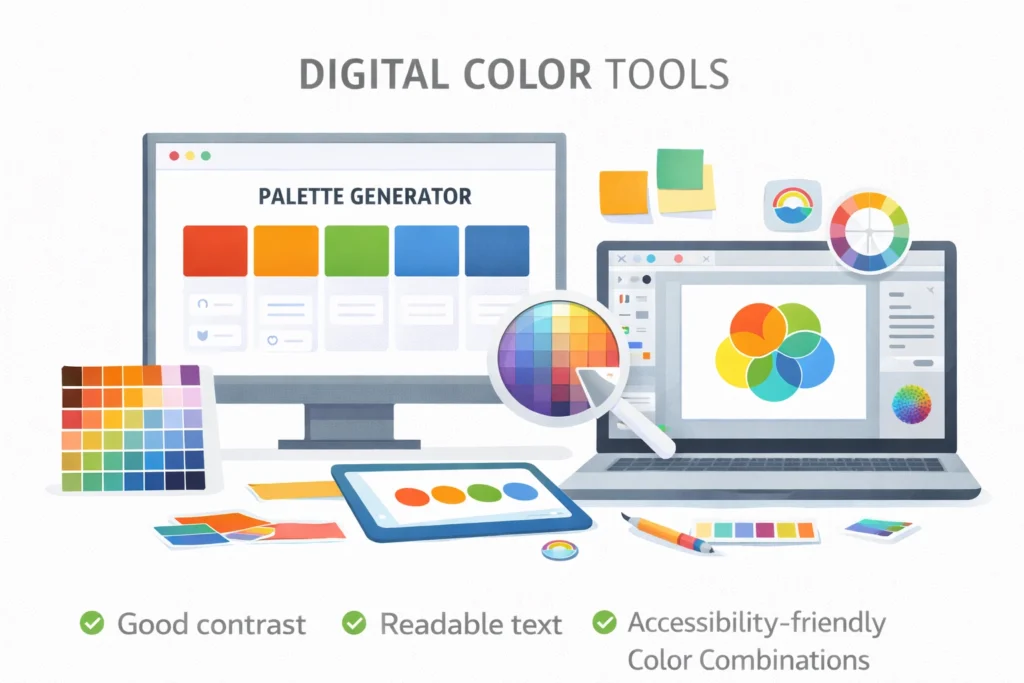
Here are useful tools designers use:
- Color palette generators
- Contrast checkers
- Brand mood boards
- Design inspiration platforms
These tools help you make informed decisions.
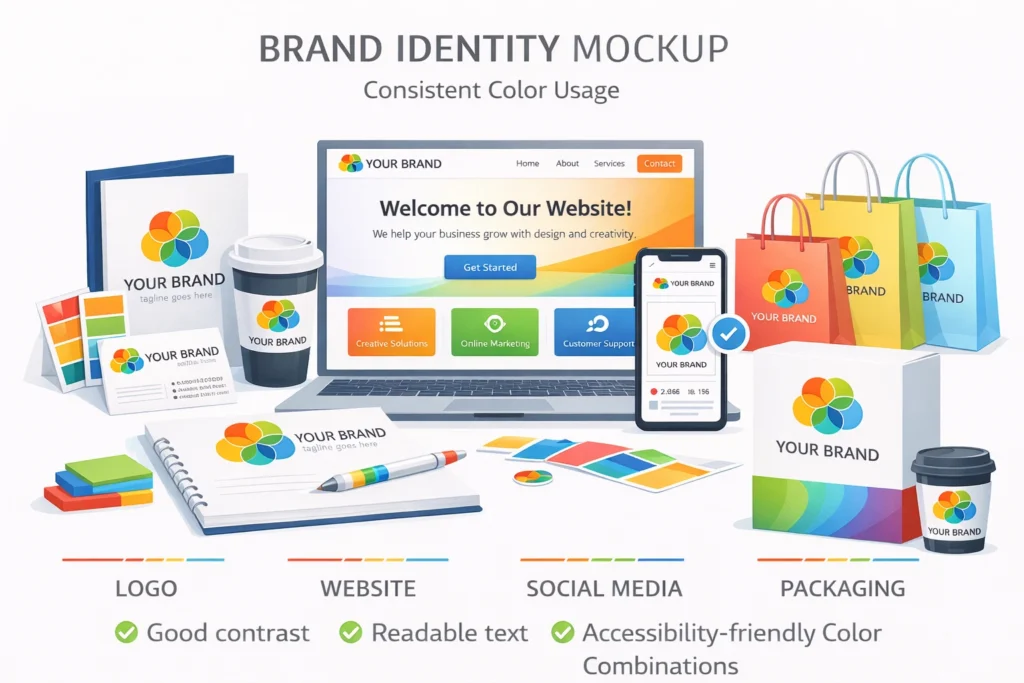
How Brand Colors Stay Consistent
Consistency builds trust.
Ways to Maintain Consistency
- Create brand guidelines
- Use the same colors everywhere
- Define HEX, RGB, CMYK values
Consistency makes your brand recognizable.
Examples of Strong Color Branding
Strong brands use color consistently across:
- Logos
- Websites
- Social media
- Packaging
This repetition strengthens brand recall.
Trends in Brand Colors for 2025
Popular trends include:
- Earthy tones
- Soft pastels
- Bold accent colors
- Dark mode-friendly palettes
Trends should inspire-not dominate-your brand.
Conclusion
Choosing the right colors for your brand is not about personal taste-it’s about strategy, psychology, and clarity. The right color palette helps your brand stand out, connect emotionally, and build trust with your audience.
In 2025, successful brands are those that use color intentionally, consistently, and thoughtfully.
If you understand your brand and audience, the right colors will follow naturally.
